
CONCEPT NOTE:
“All These Faces Are Mine” is inspired by the many stories we tell about ourselves; “stories that skirt in and out of the truth”, stories that become the truth.
It asks the question:
“What is this truth and how does telling the story make it so ?
If we tell a story enough times,
Does it become who we are ?
Does it matter which face is our real one, and can the stories we tell change it ?
KEYWORDS:
IDENTITY (ies)
STORYTELLING THE BODY
CHARACTER
NARRATIVES OF THE SELF1
The human body is fundamental to how we understand aspects of “IDENTITY”
& IDENTITY POLITICS:
Gender
Sexuality
Race
Ethnicity
Artists typically adjust and alter their body image to conform with or rebel against social conventions and to express messages to others around them
THE BODY IS A SITE FOR EXPRESSING IDENTITY
So the body becomes the “MEDIUM” & “MANNER” of the “DISCOURSE ON IDENTITY POLITICS”
Thus “The actions an artist performs are central to the work of Art”
PERFORMANCE ART becomes a way to
Claim Control over the body
Express/Raise issues of Gender, Sexuality, Race & Ethnicity
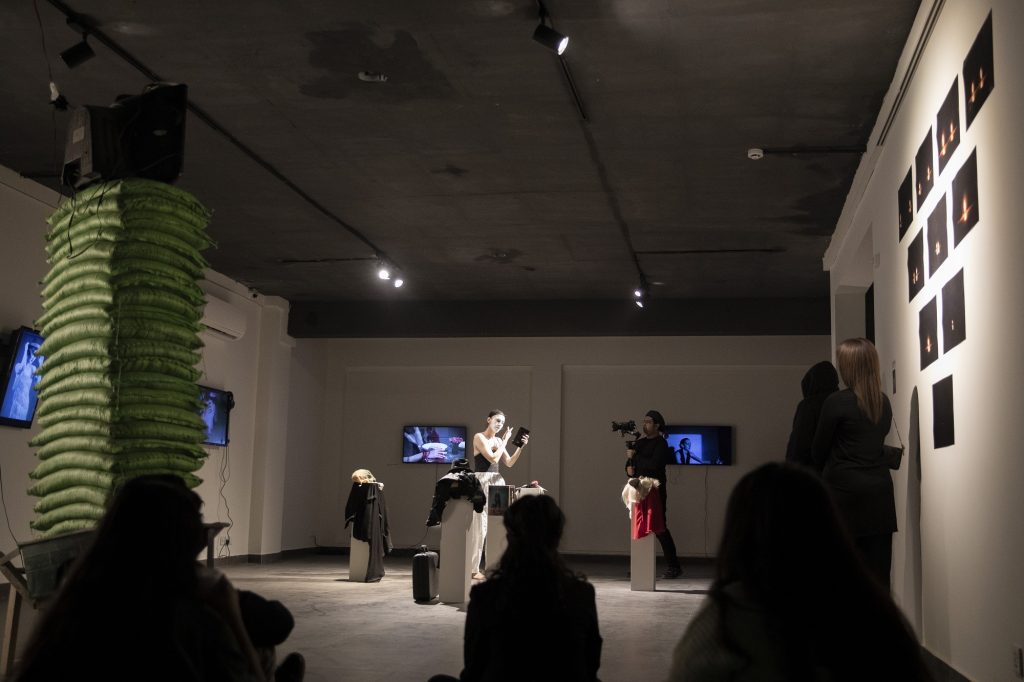
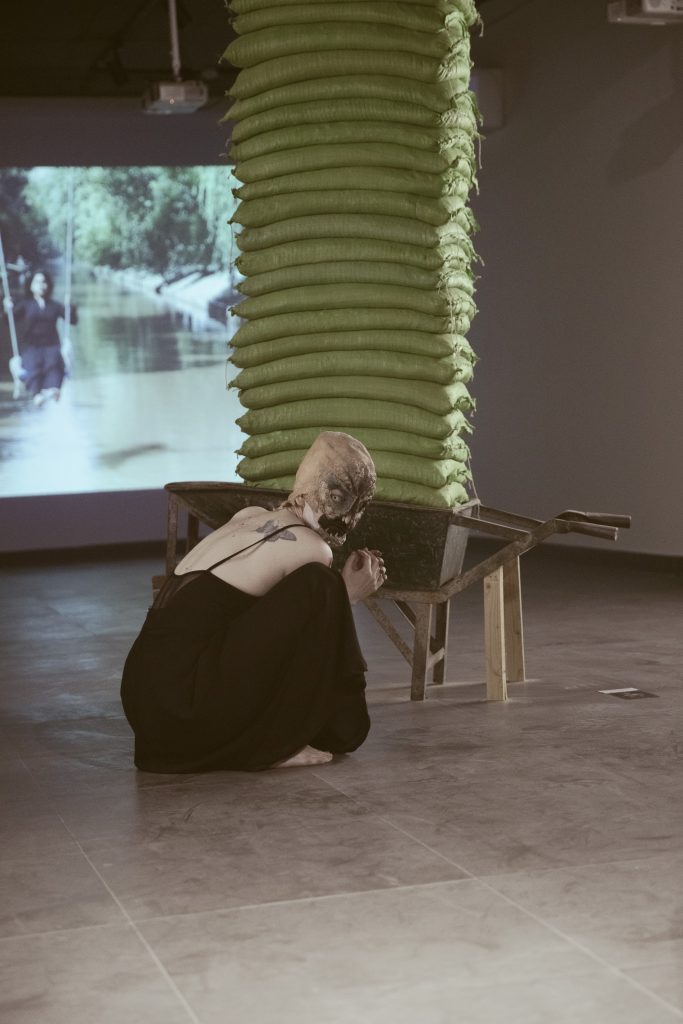
Talal Faisal Ismaili (Curator’s Piece)

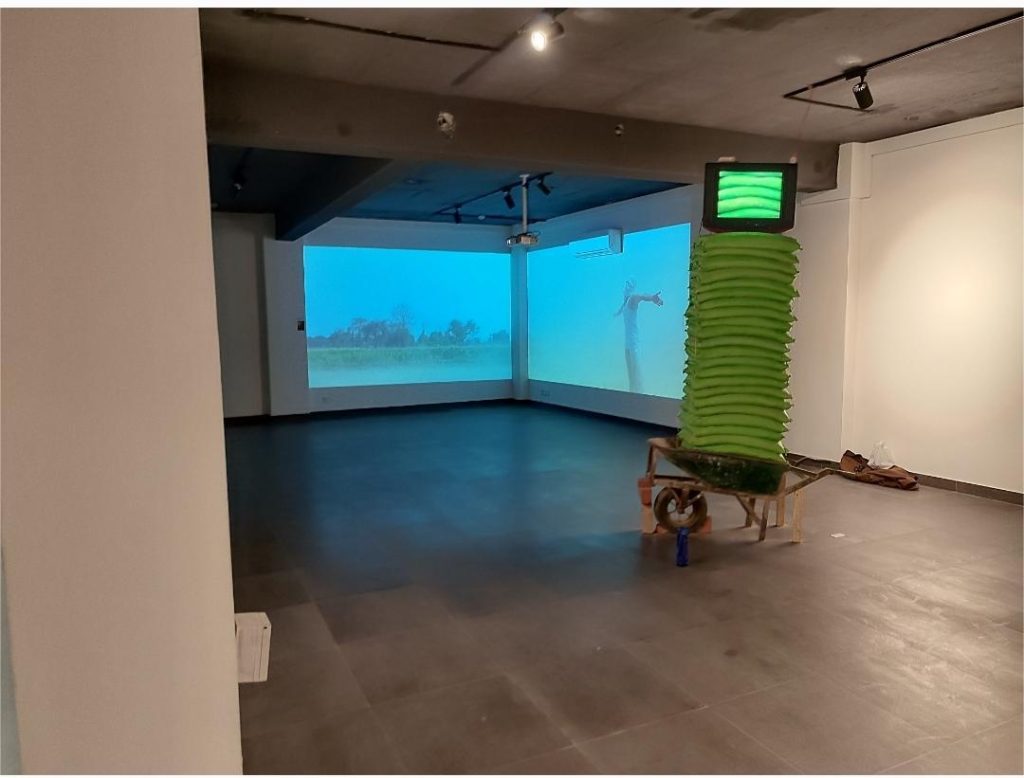
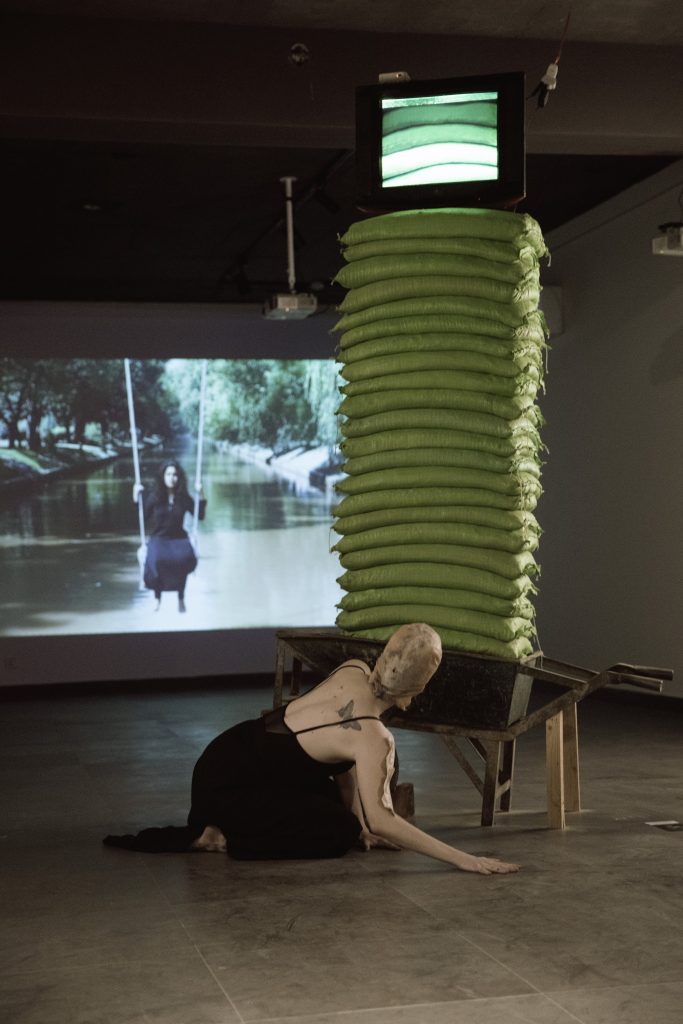
“Scarecrow” (2023) considers the potential of the body as an archive to examine the
Formation & Construction of Memory & Identity,
Questioning dominant
>History & Culture
Visibility & Representation
“Threshing” is an integral process in agriculture that involves the separation of the grain from the sheaf.
Back in the day, threshing was a very labor and time intensive process because it was done manually,
until it’s mechanization towards the late 18th Century which considerably sped the laborious task.
The work is a battle between man and machine, the power-driven threshing machine bombarding the body with “wheat chaff” or threshing detritus.
Excruciating in terms of noise and pain, the fifteen minute long performance was troublesome as the ordeal took its toll on me but gradually the body adapted to it becoming numb, the way anybody reacts to prolonged suffering i.e. it internalizes pain and misery.
My intention is to bring into discussion the notion of labor,
On a first layer it’s technological, historical and social impact on the human condition,
And on a second, it’s relationship to nature.
I could term my effort as: “An enquiry of current social realities that emanate from earlier
histories” e.g. global capitalism as a corollary of colonialism.
The recurring use of wheat in my work reveals the colonial processes inherent in global trade and commerce.
Gillian Rhodes
Gillian is an American performer, writer, and storyteller. Gillian’s work is a constant study in, through, and across the borders of culture, discipline, and media. She started training in ballet at the age of five and majored in dance at Columbia University in New York. Since 2012, she has been living in Cambodia, South Korea, and now Pakistan, and integrates the experiences and learnings of navigating new societies, languages, cultures, and artistic styles into everything she creates.
Due to her unique position in the places she lives and the work she does, Gillian’s work is inevitably the product of the dynamic tension of boundaries: understanding them, respecting them, challenging them, blurring them. In Cambodia, she introduced musical theatre and contemporary dance to a government TV channel. Her performing group, which included both classically trained folk dancers and a break-dancer, performed at an international festival in Malaysia.
In South Korea, she was one of the only foreign dancers in the contemporary dance scene. As a member of Second Nature Dance Company, Gillian was involved in the creation of Bit Sapiens, a multimedia performance speculating on the future of humanity. The performance was awarded the 2018 Dance vision “Frontier Spirit Award.”
Gillian shifted to Lahore, Pakistan after speaking at Beaconhouse National University’s “School of Tomorrow” conference in Islamabad in 2017, and quickly became involved in the budding contemporary dance scene. She co-taught the first accredited choreography course in a Pakistani university and helped introduce the first monthly choreography exhibition. She has performed Punjabi bhangra and kathak with Versatile Dance Company all around the country, and has appeared in numerous commercials and campaigns as a model and actress. She choreographed Sarmad Khoosat’s award-winning film Kamli starring Saba Qamar and Sania Saeed.
In 2020 due to the coronavirus pandemic, Gillian dove into the world of digital creations, developing dramatic, site specific live Instagram performances, finding stages in everything from her stove top to her closet.
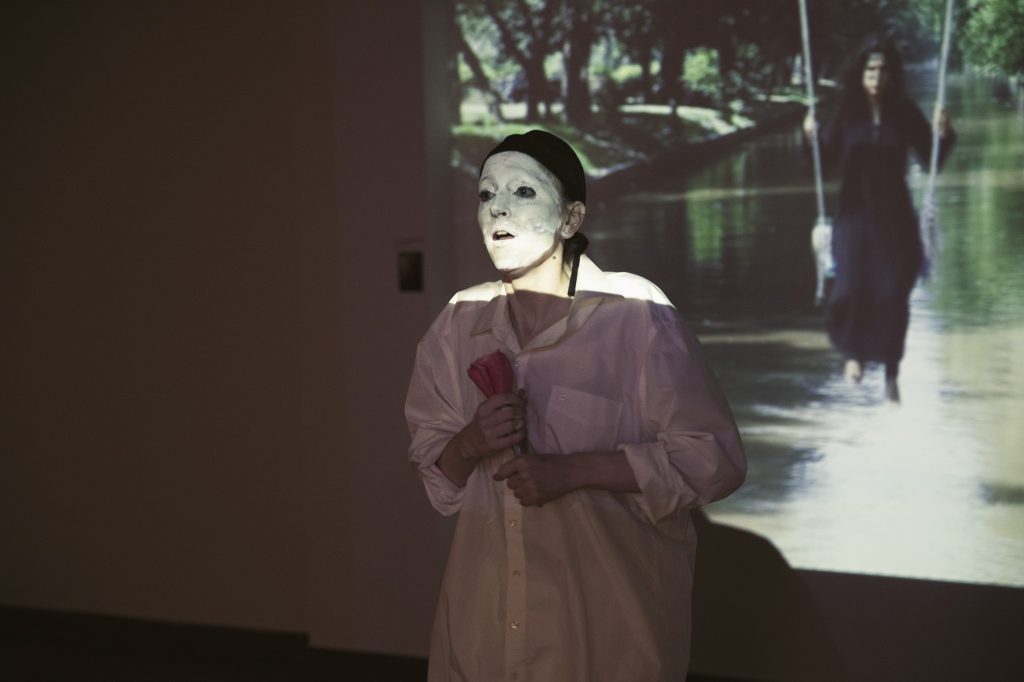
Following the pandemic, Gillian turned to new methods of storytelling, developing her four artistic alter egos and theatrical one-person plays. Her 1-person play, Searching for Pierrot, featured all four of her characters and was performed in Pakistan and the US.
In addition to her work as a performer, Gillian has tackled numerous other projects and interests. See more below.
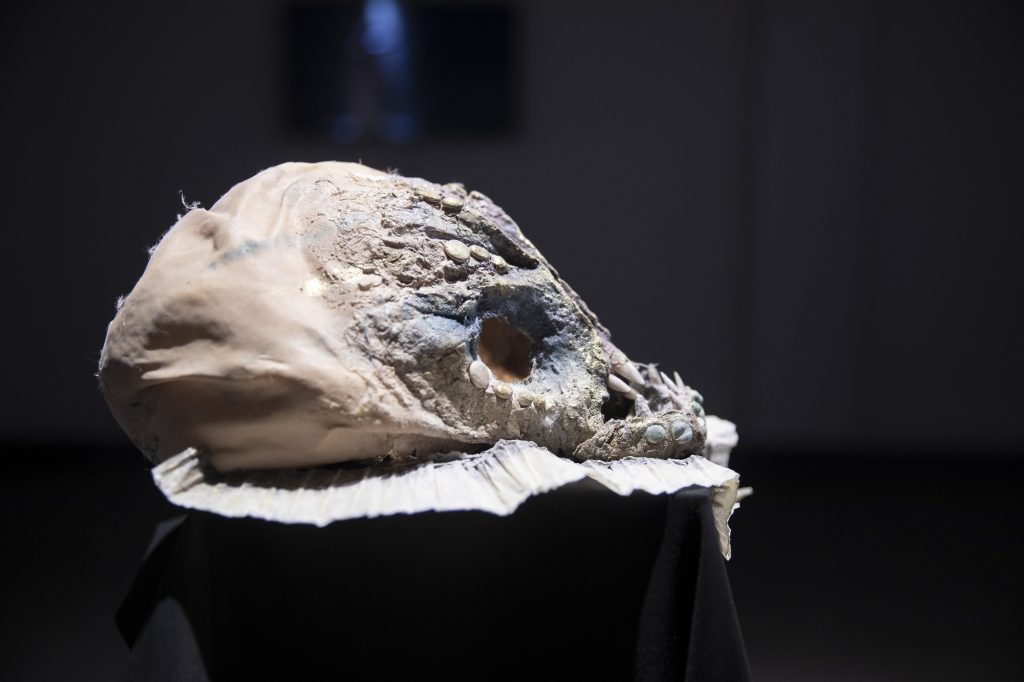
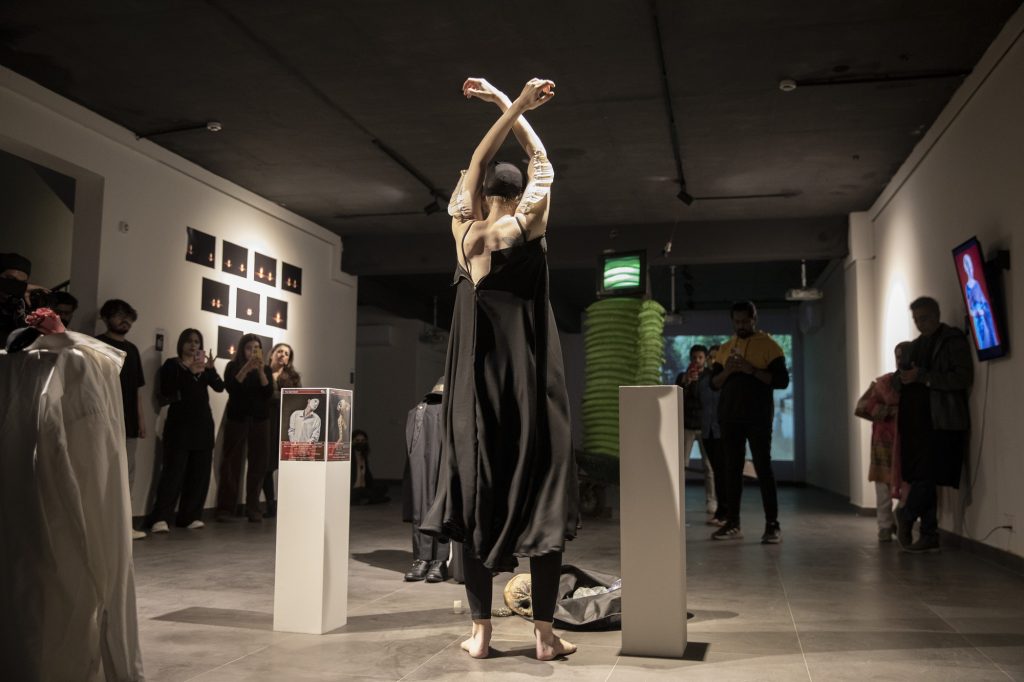
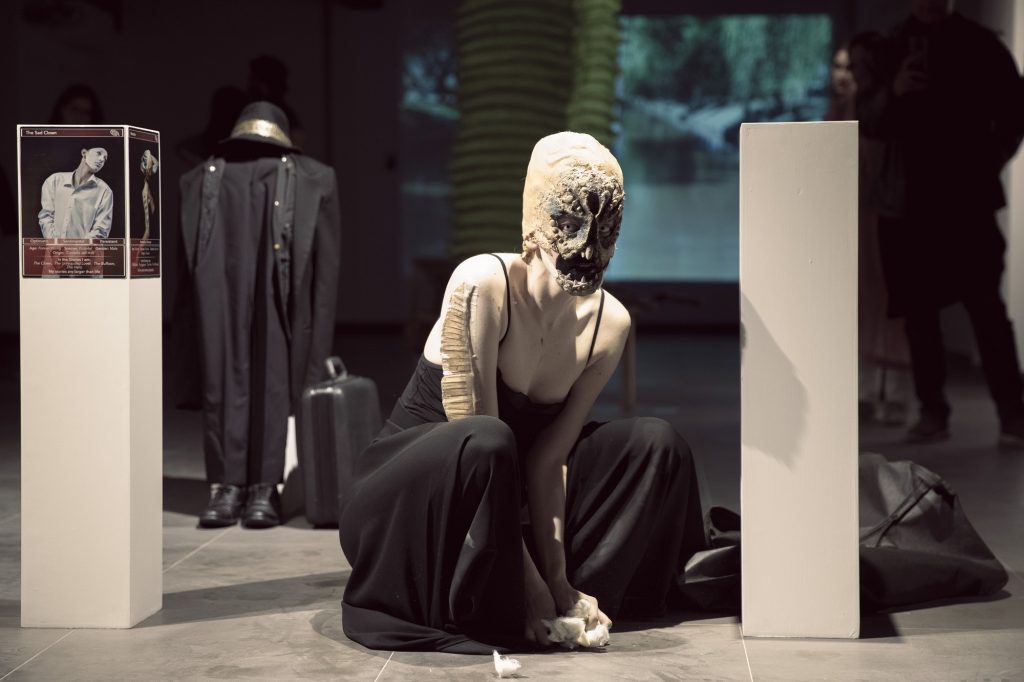
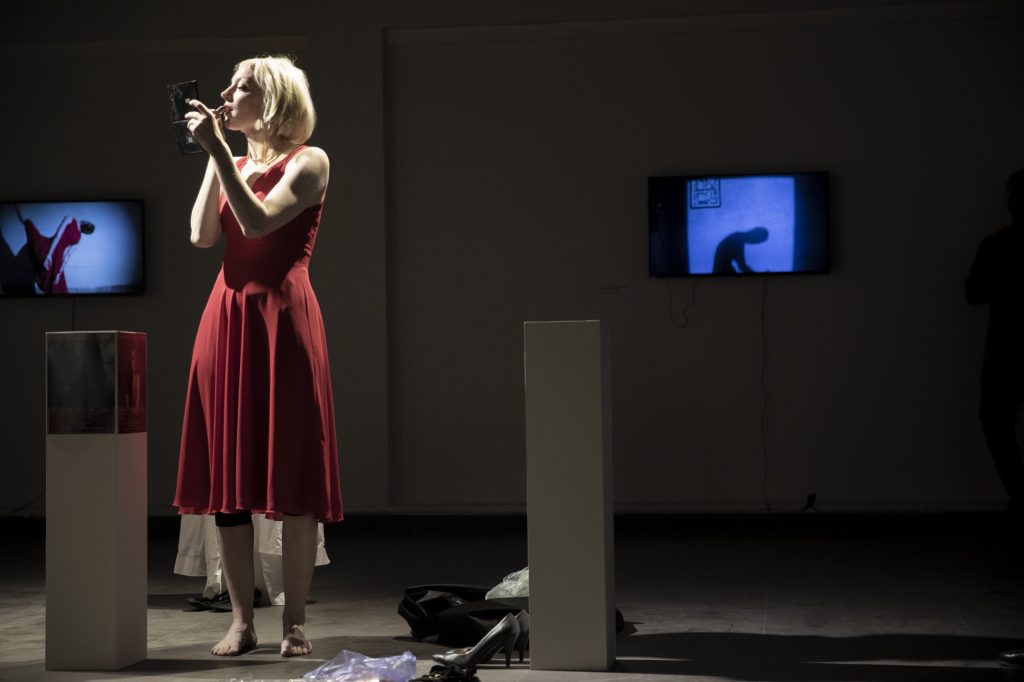
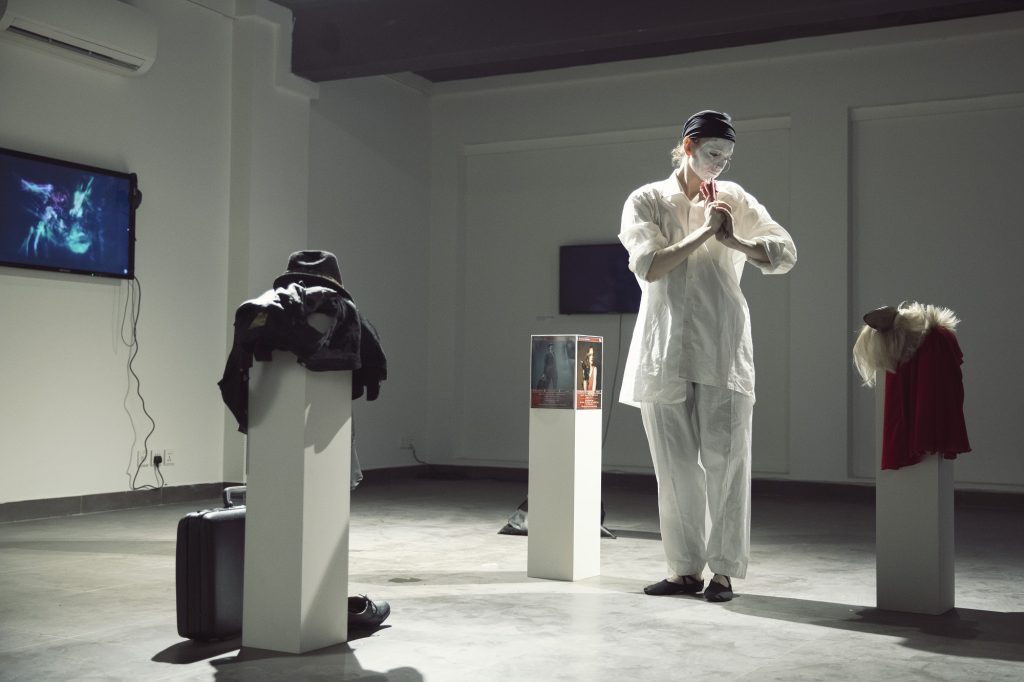
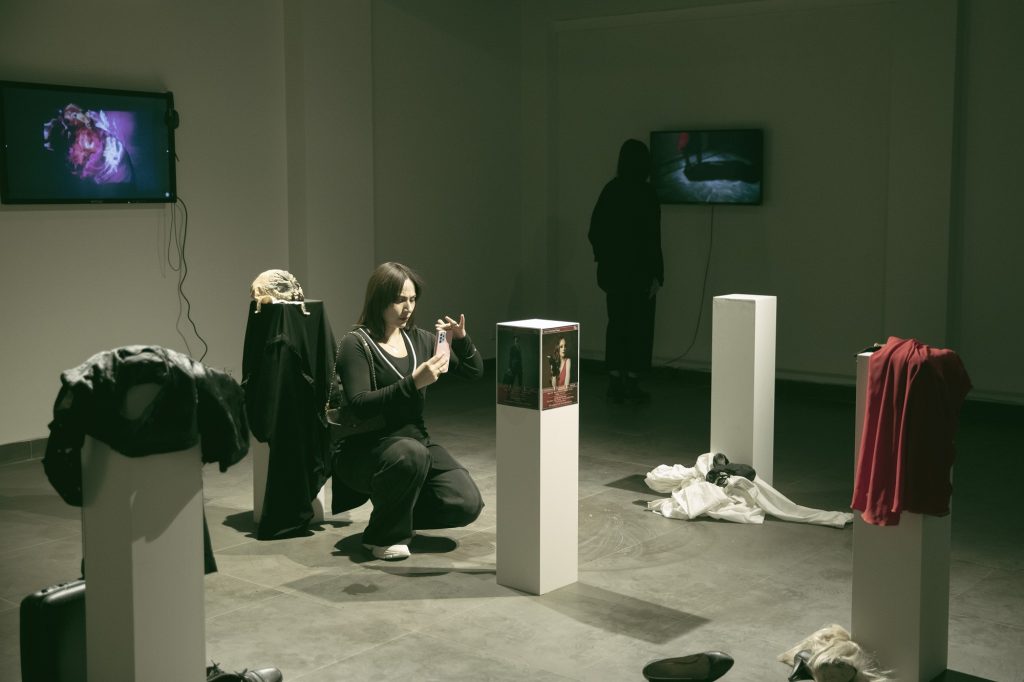
Exhibition Content (Gillian Rhodes)
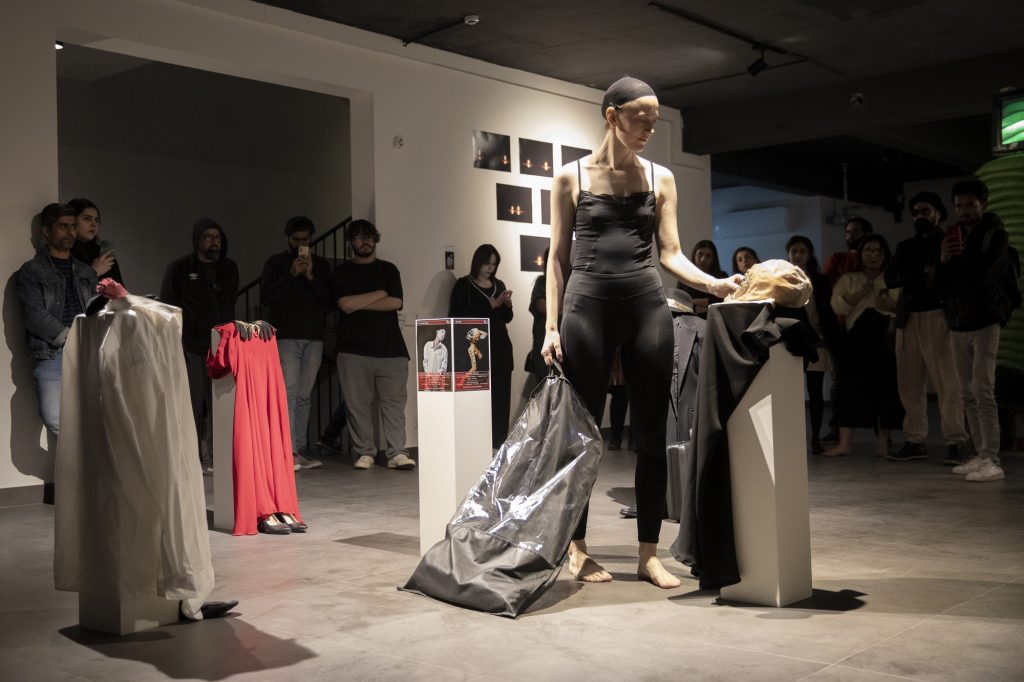
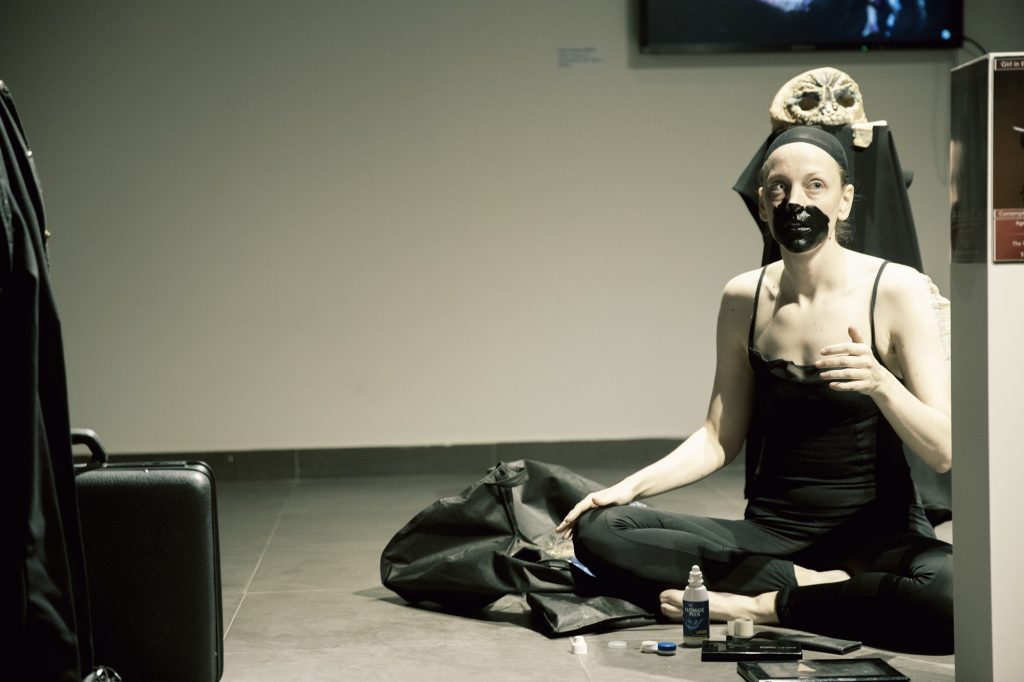
Performance Content:
- Installation in covered location transitioning between the characters
Screenings:
- A Place at the Table
- All It Costs is Everything You Have
- First Contact
- All This Useless Beauty
Prints:
- Character superpositions (see example)
Digital Content:
- Trading cards (see example)

About Work
In my artistic practice, I find inspiration in the often-overlooked artifacts of daily life. Mundane objects,
those seemingly unremarkable items that populate our everyday existence, become the focal point of
my creative exploration.
Through the lens of my work, I seek to elevate these ordinary elements to the
extraordinary, inviting viewers to reconsider the significance inherent in the seemingly banal.
In a world saturated with constant stimuli, I am drawn to the simplicity of the everyday.
From the discarded remnants of consumer culture to the routine objects that shape our domestic landscapes, I excavate the poetry embedded in the mundane. By isolating and recontextualizing these objects through the medium of visual arts, I aim to disrupt habitual ways of seeing and challenge preconceived notions about value and significance.
My process involves a careful consideration of form, texture, and composition, transforming
commonplace items into aesthetic subjects that demand attention. This deliberate act of reimagining
the ordinary serves as a commentary on the nature of perception itself, prompting viewers to question
their assumptions about what is worthy of artistic attention.
Through the use of various media – whether it be , sculpture, or mixed media installations – I explore
the intersection of the familiar and the extraordinary. The quotidian objects I choose to highlight are not
only carriers of personal histories but also vessels of collective memory. By presenting them in new and
unexpected contexts, I invite viewers to engage in a dialogue about the cultural, social, and emotional
resonances embedded in the fabric of our daily lives.
In essence, my work is a celebration of the poetry of the ordinary, a meditation on the beauty that exists
in the overlooked corners of our existence. By weaving together elements of nostalgia, critique, and
aesthetic pleasure, I hope to awaken a renewed appreciation for the richness inherent in the seemingly
mundane. Through this exploration, I aspire to connect with viewers on a visceral level, encouraging
them to discover beauty in the everyday and fostering a deeper understanding of the profound
narratives hidden within the objects that surround us.
Fusing together the discernible themes of self, domesticity and the female body, Farwa Hassan Rizwi’s provocative performance-based works
embody conflicting visual signifiers, dragging them into ironic yet subtly unnerving relationships with the viewer.
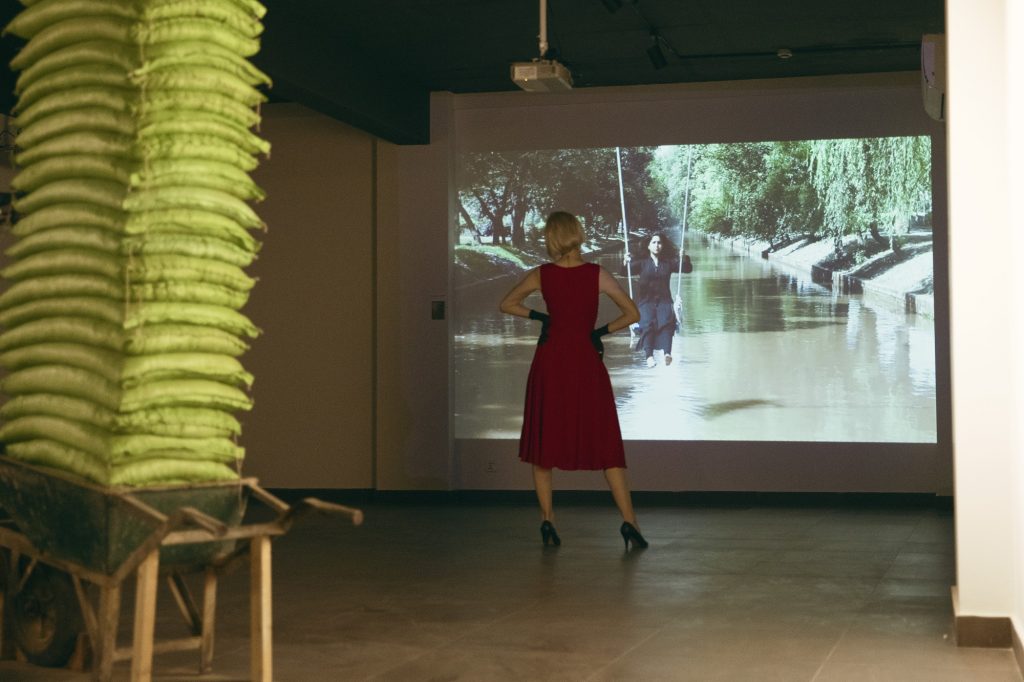
Peeng (2016) is a video-based performance work that depicts the artist swinging to and fro above the surface of the main Canal that runs throughout
the iconic city of Lahore.
In Ways of Seeing, John Berger’s third chapter addresses the way we see women, as well as how they see themselves. He identifies that women
are both ‘the surveyor and the surveyed’.
Where men may act, women watch themselves being watched. His argument was persuasive and, presented and published in 1972, served to advocate for the women’s movement. If the surveyor role is understood not only to be the way men behave in the world but also as a masculine role, then the question is whether we have not bought into the traditional surveyor mind-set that diminishes the one surveyed.
The problem may not be that women are surveyed, if that is understood as an inherent quality of being present in the world and a necessary aspect of self-consciousness, but rather that men are not encouraged to accept and embody their surveyed self in turn.
The work is a critique on contemporary society exposing the imposition of a hypocritical, vulnerable and repressed feminine culture, shedding light on the concept of female servitude as a contributor to enhancing male honor that is not a new concept in the subcontinent at large.
